Small Changes, Big Impact: The Marginal Gains of Sustainable Design
We engage with elite athletes and sports enthusiasts on a daily basis, meaning we get a front seat view of how you all push your limits time after time, day after day. In parallel, us sports brands that supply your clothing and equipment are being challenged to push ours too—not just in garment performance, but in global responsibility, and we wouldn’t have it any other way.
We know that sustainable design is about a series of thoughtful decisions across our whole process; materials, manufacturing, and product lifecycle. If all of this is put together in the right way, with the right intent, they create real environmental impact.
We take very seriously our responsibility to get this right, and our environmental philosophy is embedded directly into the very fabric of our products.
Designing with Purpose
You won’t find many (if any) sportswear companies who are willing to own up to this reality but we feel it’s our duty…the sportswear industry is struggling to overcome a complex sustainability challenge. Until now, traditional synthetic performance fabrics, that provide the right profitability models, are often derived from virgin petroleum-based materials, and as a result, large volumes of plastic waste continue to enter landfills and oceans each year.
Our response is rooted in a simple but powerful idea: turn existing waste into high-performance material.
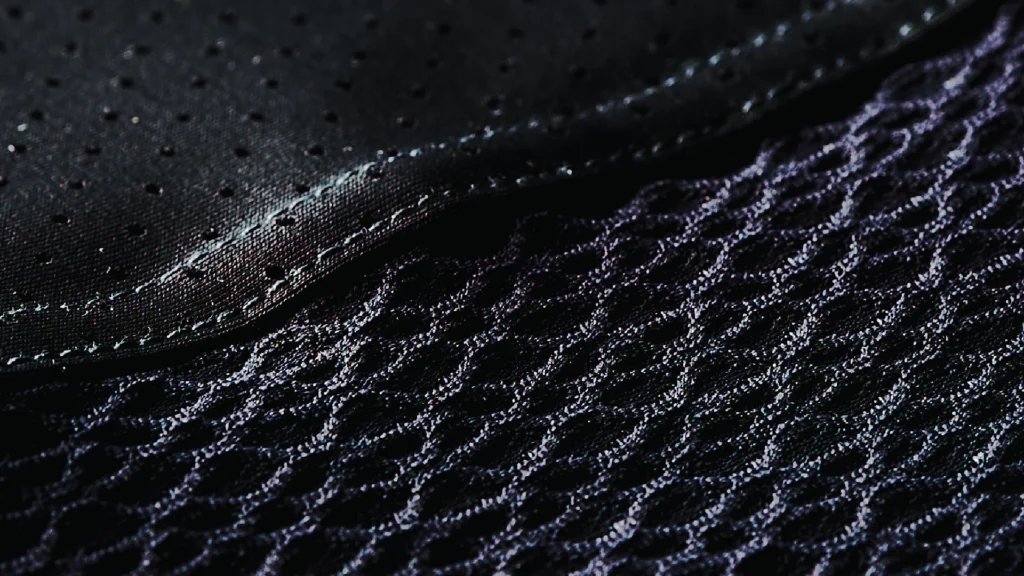
At the heart of this approach is Strati-Tex, the exclusive and game-changing fabric used in Strati base layer products. Rather than relying on newly produced plastic derivatives, Strati-Tex begins with something that would otherwise be discarded—recycled plastic bottles.
What follows is a carefully engineered transformation known as our “plastic-to-yarn” process.
From Plastic Bottle to Performance Fabric
The journey of Strati-Tex starts long before it becomes part of an athlete’s trusted kit bag.
1. Collection and Sorting
Used plastic bottles are collected and sorted to ensure they meet recycling standards.
2. Cleaning and Processing
The bottles are washed thoroughly and processed into small plastic granules, removing labels, adhesives, and contaminants.
3. Melting and Extrusion
These granules are then melted and extruded into fine filaments—thin strands that will become the foundation of the yarn.
4. Spinning into Yarn
The filaments are spun and strengthened into durable recycled yarn.
5. Fabric Construction
Finally, the yarn is expertly woven into Strati-Tex fabric, engineered specifically for performance base layers and exclusive to Strati products.
The result is a material that delivers the qualities athletes demand—lightweight comfort, supreme moisture management, and unsurpassed durability—while also giving new life to plastic that might otherwise remain in the waste stream.
It’s a process that demonstrates how sustainability and performance don’t have to exist in opposition. With the right design thinking, they can reinforce one another.
The Power of Marginal Gains
We’re pragmatic about the job at hand – one or two recycled bottles won’t solve the plastic crisis. One sustainable garment won’t transform an industry overnight.
But marginal gains rarely come from a single breakthrough. Instead, and much like sporting performance, they come from incremental improvements repeated at scale. We’re absolutely laser focused on our process when it comes to materials chosen, processes refined, and products redesigned. Because when multiplied across thousands of garments and thousands of athletes, those small changes begin to matter.
The creation of Strati-Tex is just one example of this philosophy in action. By rethinking the origin of our fabrics and embedding recycled materials into core product lines, we make sustainability part of everyday performance apparel rather than a niche alternative.
A Responsibility Shared by the Industry
The shift toward sustainable sportswear isn’t a challenge any one brand can solve alone. It requires collaboration across manufacturers, designers, suppliers, and athletes themselves
We see our role as an active player in that transition—and we throw out a call to arms across our industry to collaborate with us to demonstrate that performance gear can evolve without compromising on quality or innovation.
Because the future of sport, and the world as we love it, depends not only on how fast we move, but on how responsibly we move forward.
The biggest changes begin with the small but right decisions—thread by thread.
Marginal Gains. Maximum Performance.